

- 简
- 繁
- En


Nurturing Future International Criminal Lawyers | Behind the Wig
发布: 2026-07-06 07:00
撰文: 大律師 / Barristers

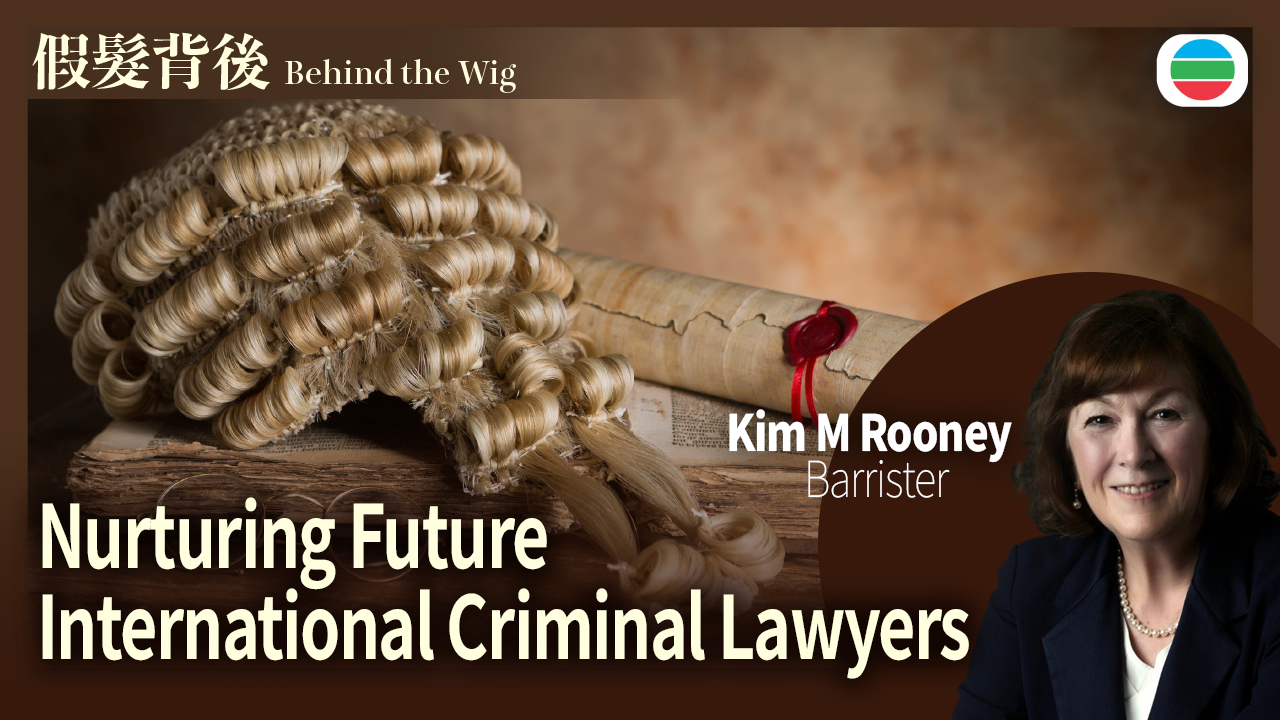
Kim M Rooney
Barrister
Our youth face many challenges in the current geo-political and economic environment exacerbated by their vulnerability to the consequences of the explosive growth of artificial intelligence (AI), including AI’s potential impact on their education, critical thinking skills, employment opportunities and social interaction.
For law students, providing opportunities for them for international social connection and debate, as well as for intensive research of complex factual and legal issues, including of concepts of fairness, due process and justice, can better equip them to deal with current events and the future. International moots (legal debates of hypothetical situations) provide one such way in an enjoyable and educational, if sometimes stressful, setting.
An example of such a moot competition is the International Bar Association (IBA)/ International Criminal Court (ICC) Moot Court (the “IBA/ICC Moot Court”) which is designed to simulate ICC proceedings in a mooting competition for law students.
The ICC is the only permanent international court which may prosecute individuals for international crimes, including war crimes, in specified circumstances. It was established in 2002 under the Rome Statute of the International Criminal Court (the “Rome Statute”) to which 125 States are a party and is based in The Hague which is a global centre for international law.
The IBA/ICC Moot Court established in 2004, involves a case study focused on international criminal law and the Rome Statute. Preparation and participation in the IBA/ICC Moot Court take up to a year and require dedicated work by the teams as they must first submit written arguments (memorials) which are marked by hundreds of evaluators from around the world. Many teams will then have the opportunity to argue orally multiple times.
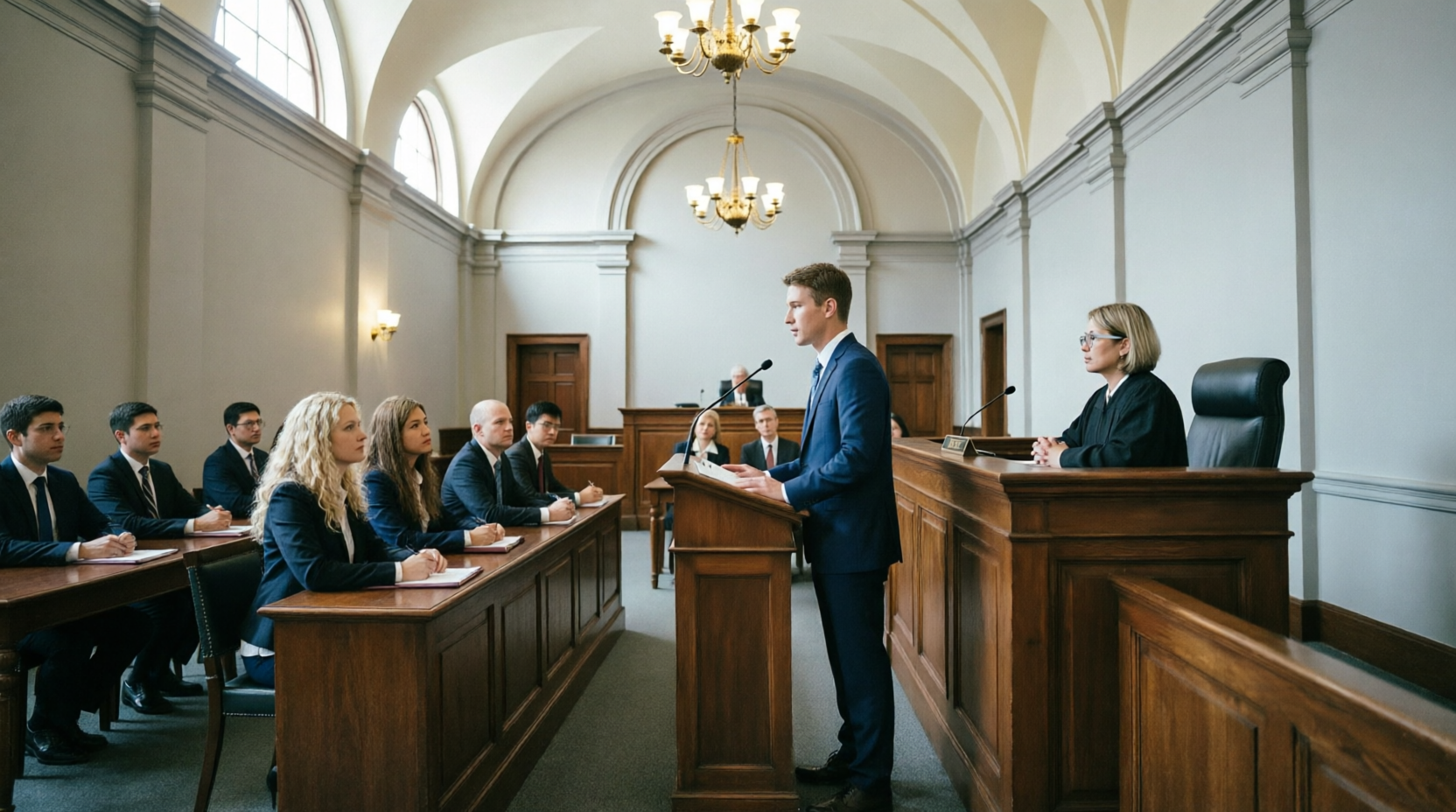
The IBA/ICC Moot Court is conducted in a number of languages, currently English, French, Putonghua and Spanish in national rounds; a version in Arabic is being planned. For example, each year there is a Putonghua-language version held in the Mainland (in which 130 teams competed in 2026) as well as an English-language competition held in the Mainland (involving more than 60 teams in 2026); the teams competing regularly include teams from Hong Kong universities. The winners of these rounds in the Mainland compete in the international round in The Hague.
The IBA which supports the IBA/ICC Moot Court has provided scholarships to support teams from countries participating for the first time, which since 2018 has included teams from The Gambia, Iraq, Kyrgyzstan, Nepal, Nigeria, Sierra Leone, South Sudan, Tanzania, Ukraine, Brazil, Lebanon, Chile, India and Kenya.
In mid-June 2026, 94 teams from 48 countries (including the Mainland and other parts of Asia, Africa, Europe and the Americas) came to The Hague to compete in the international round (English version) of the IBA/ICC Moot Court. The teams presented oral arguments in the roles of the Office of the Prosecutor, the Defence and State Counsel. The hypothetical case involved alleged war crimes arising from a blockade in which a human aid mission vessel (carrying much needed antibiotics) was refused entry to a country with a health epidemic and the capture and transfer of a senior government official accused of a war crime to The Hague for prosecution before the ICC. Around 160 legal professionals with a background in international law serving as the judges. (It was a pleasure and terrific learning opportunity to participate as a judge.)
The final round of the English version was held in the ICC's Courtroom I in The Hague on 19 June 2026 with an ICC judge presiding. It was won by Bond University (Australia). The National Law School of India University took second place, and Singapore Management University came third.
That there is a demand by students for this kind of opportunity to participate in an international criminal moot is evidenced by the level of support of the national rounds of the IBA/ICC Moot Court and by the growth in the number of teams competing in the international round (English version), increasing from 12 in 2004 to 94 in 2026, notwithstanding the expense, logistical difficulties and time involved.
The students participating in the IBA/ICC Moot Court have demonstrated first class critical thinking skills, and an ability to think on their feet when orally making submissions on complex issues, dedication in preparation while under many other pressures, graciousness in defeat as well as in winning, and enthusiasm for engaging with teams and judges from around the world. The future of international law and practice is in the hands of such youthful mooters; their principled engagement and enthusiasm provide reasons for hope.
Ms. Kim M Rooney is a Council Member of the Hong Kong Bar Association (“HKBA”). She also chairs the HKBA’s Arbitration Committee and is a Member of its Construction Law Committee and Standing Committee on AI and Ethics. She practises as an international arbitrator and barrister focusing on arbitration in the aviation, commercial, construction, energy, finance (including cryptocurrency), infrastructure, information, communications and technology, IPR, and investment sectors.

Behind the Wig is a weekly legal column written by practicing barristers specialising in criminal, civil, and commercial law. Drawing on their legal expertise and practical experience, or sharing their observations and insights as barristers, they analyse social issues, encourage readers to interpret everyday matters through a legal mindset, and promote the spirit of the rule of law.
The views expressed in this article are the author’s own and do not reflect TVB’s editorial stance.
更多新闻
热门新闻


条款及细则
条款及细则
随时随地观看新闻,立即下载

'%3e%3cpath%20id='路径_2'%20data-name='路径%202'%20d='M579.91,145.916a42.433,42.433,0,1,0,42.528,42.433,41.772,41.772,0,0,0-42.528-42.433m0,68.138a25.8,25.8,0,1,1,23.91-25.705,24.572,24.572,0,0,1-23.91,25.705m-92.9-68.138a42.433,42.433,0,1,0,42.528,42.433,41.772,41.772,0,0,0-42.528-42.433m0,68.138a25.8,25.8,0,1,1,23.911-25.705,24.572,24.572,0,0,1-23.911,25.705m-110.38-55.1v17.956h42.621A37.793,37.793,0,0,1,409.8,199.6a44.037,44.037,0,0,1-33.266,13.135,47.914,47.914,0,0,1,0-95.734,45.836,45.836,0,0,1,32.415,12.854l12.664-12.664a62.75,62.75,0,0,0-45.174-18.144,66.153,66.153,0,1,0,0,131.739,60.2,60.2,0,0,0,45.93-18.9A59.452,59.452,0,0,0,438.154,170.2a58.644,58.644,0,0,0-.946-11.246Zm451.638,14.364a39.409,39.409,0,0,0-36.291-26.933A40.259,40.259,0,0,0,752,188.822a41.49,41.49,0,0,0,42.055,42.432,42.148,42.148,0,0,0,35.344-18.9l-14.459-9.45a24.193,24.193,0,0,1-20.885,11.718,21.546,21.546,0,0,1-20.6-12.852l56.7-23.436ZM770.431,187.5a23.249,23.249,0,0,1,22.21-24.76,16.441,16.441,0,0,1,15.781,9.45Zm-46.023,40.637h18.9V103.577h-18.9Zm-30.525-72.77h-.568a29.385,29.385,0,0,0-22.3-9.449,42.526,42.526,0,0,0,0,85.053,28.908,28.908,0,0,0,22.3-9.449h.663v6.142c0,16.256-8.7,24.854-22.681,24.854a23.431,23.431,0,0,1-21.358-15.12l-16.255,6.71a40.446,40.446,0,0,0,37.8,25.044c21.829,0,40.354-12.853,40.354-44.134V148.468H693.883Zm-21.359,58.594A24.381,24.381,0,0,1,648.9,188.443a24.57,24.57,0,0,1,23.625-25.894,23.909,23.909,0,0,1,22.682,25.894,23.722,23.722,0,0,1-22.682,25.611ZM915.592,103.484H870.985V228.135h18.9V180.883h25.988a38.747,38.747,0,1,0,0-77.4Zm.471,60.1H889.6V120.872h26.461a21.358,21.358,0,1,1,0,42.715m115.012-17.861a34.97,34.97,0,0,0-33.171,18.9l16.539,6.9a17.583,17.583,0,0,1,17.01-9.452,17.958,17.958,0,0,1,19.564,16.066v1.324a41.193,41.193,0,0,0-19.373-4.819c-17.767,0-35.913,9.449-35.913,28.35a28.352,28.352,0,0,0,30.9,27.407,26.277,26.277,0,0,0,23.722-12.191h.661v9.45h17.956v-47.44c-.095-22.115-16.539-34.5-37.9-34.5m-2.268,68.328c-6.047,0-14.552-3.024-14.552-10.585,0-9.45,10.583-13.325,19.751-13.325a33.169,33.169,0,0,1,17.011,4.159,22.588,22.588,0,0,1-22.21,19.751m105.468-65.586-21.357,54.057h-.663l-22.02-54.057H1070.2l33.172,75.6-18.9,42.054h19.374l51.128-117.563ZM966.718,228.135h18.9V103.577h-18.9Zm-840.431-101.5L4.377,4.631A20.131,20.131,0,0,0,.029,18.24V238.72a21.079,21.079,0,0,0,3.4,12.569Zm4.064-3.876,37.8-37.8L25.356,3.214A18.9,18.9,0,0,0,8.912.945Zm89.4-8.695L172.5,87.417l-38.652,39.221,41.3,41.3L219.28,142.8c14.46-7.844,14.46-20.791.472-28.73m-89.4,16.539L7.495,254.974a17.768,17.768,0,0,0,17.768-1.607l144.686-82.219h.566Z'%20fill='%23fff'/%3e%3c/g%3e%3c/svg%3e)


Copyright 2026 Television Broadcasts Limited