

- 简
- 繁
- En


An Exercise in Interpretation – the 2026 Odyssey Movie|Behind the Wig
发布: 2026-08-31 07:00
撰文: 大律師 / Barristers


Kim M Rooney
Barrister
One of the key tasks that a barrister, solicitor, arbitrator or judge performs is to interpret the words used in a contract, statute or regulation. The purpose of this interpretation exercise is to identify what the words in the provision were intended to mean by those who drafted them – the meaning of the words may be unclear or may be disputed, and the interpretation adopted can lead to different legal outcomes.
However, barristers and other legal professionals are not the only people who need to interpret documents. For example, translators and movie script writers are among those who must interpret words for literary or artistic purposes. A recent example of this is the 2026 movie “The Odyssey” directed by Christopher Nolan. Since its global release in July, this movie has been seen by an estimated 100 million people or more.
“The Odyssey” movie is based on a modern translation of “The Odyssey” by the ancient Greek poet Homer, the epic poem in ancient Greek of approximately 12,110 lines in 24 “books” (and most English and Chinese verse translations preserve a similar line count) composed around 3,000 years ago, first orally, and later written down.
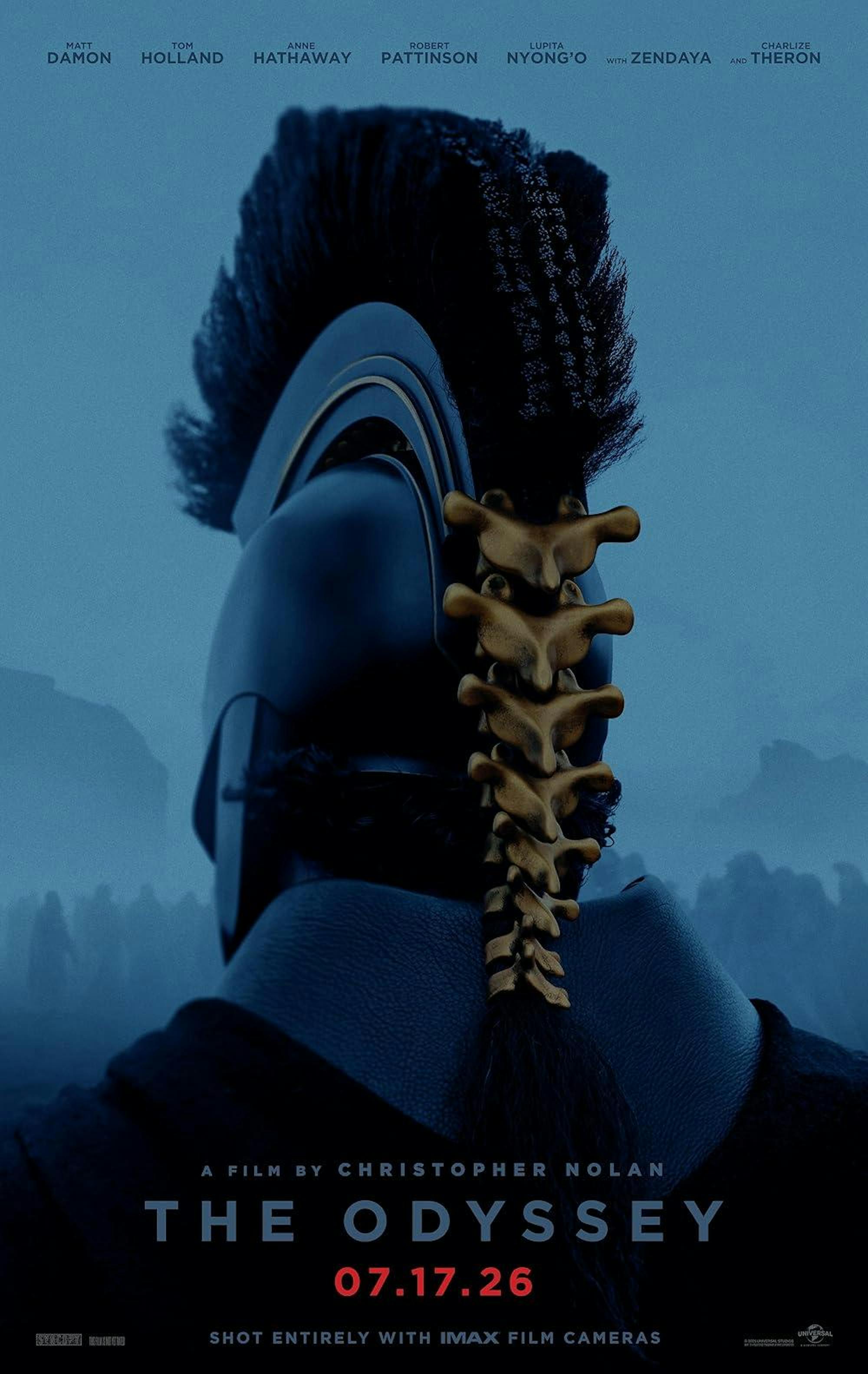
“The Odyssey” poem which is about the 10 year long return of its hero Odysseus from the Trojan War, has been hugely influential on the development of Western literature and culture – it is a foundational text. Classicist Mary Beard has described the themes of the poem “The Odyssey” as including the story of war, abandonment by those who were left at home, and homecoming from war (Nostos), heroes (many flawed), family relationships, the relationship between men and women and their roles. The supernatural features (with the intervention of many Greek gods) as do questions of fate and personal agency, among other themes. Many of those themes still resonate today.
“The Odyssey” has been translated into numerous languages since the 3rd century BC, with more than 60 English versions since the 17th Century, including by Alexander Pope, Robert Fagles and Emily Wilson (whose translation is said to have been a source for the movie). E. V. Rieu’s prose translation published by Penguin Classics after World War II, made “The Odyssey” more accessible for general readers, including returned veterans of World War II. While the original Greek text of “the Odyssey” is in poetic form, some translators have used prose.
Over time fewer people have actually read “The Odyssey” although many of its stories have been the source of children’s stories and inspired contemporary novels and poems.
“The Odyssey” movie has generated a global interest in “the Odyssey” text. There is continuing discussion about the approach the director has taken to interpreting and presenting the poem to express his artistic vision and to attract a mass audience for this movie. While the movie focuses on the themes of the destructiveness of war, the nature and flaws of a hero, homecoming, coming of age, and family (among others), many commentators have observed that it has simplified the character of Odysseus, the hero, removed reference to some important characters and events, changed the roles and nature of some key characters, and reduced reference to the supernatural, including the role of the Greek gods.
However, as Mary Beard and other commentators have said, Nolan’s movie of “The Odyssey” has encouraged people to talk much more about its source poem and to read it. By creating a movie featuring great actors and cinematography with clear themes that have attracted a large global audience and sparked a conversation about the interpretation of ideas and themes from 3,000 years ago, and how many of these are still relevant today, Nolan’s movie “The Odyssey” shows how ancient themes and artistic works (in the broader sense) are still relevant to, and can inform and enrich our lives.
From a lawyer’s perspective, the movie “The Odyssey” also shows how a single (albeit very long) document, can give rise to many interpretations, which is what we, who practise law in various ways, deal with every day.
Ms. Kim M Rooney is a Council Member of the Hong Kong Bar Association (“HKBA”). She also chairs the HKBA’s Arbitration Committee and is a Member of its Construction Law Committee and Standing Committee on AI and Ethics. She practises as an international arbitrator and barrister focusing on arbitration in the aviation, commercial, construction, energy, finance (including cryptocurrency), infrastructure, information, communications and technology, IPR, and investment sectors.

Behind the Wig is a weekly legal column written by practicing barristers specialising in criminal, civil, and commercial law. Drawing on their legal expertise and practical experience, or sharing their observations and insights as barristers, they analyse social issues, encourage readers to interpret everyday matters through a legal mindset, and promote the spirit of the rule of law.
The views expressed in this article are the author’s own and do not reflect TVB’s editorial stance.
更多新闻
热门新闻


条款及细则
条款及细则
随时随地观看新闻,立即下载

'%3e%3cpath%20id='路径_2'%20data-name='路径%202'%20d='M579.91,145.916a42.433,42.433,0,1,0,42.528,42.433,41.772,41.772,0,0,0-42.528-42.433m0,68.138a25.8,25.8,0,1,1,23.91-25.705,24.572,24.572,0,0,1-23.91,25.705m-92.9-68.138a42.433,42.433,0,1,0,42.528,42.433,41.772,41.772,0,0,0-42.528-42.433m0,68.138a25.8,25.8,0,1,1,23.911-25.705,24.572,24.572,0,0,1-23.911,25.705m-110.38-55.1v17.956h42.621A37.793,37.793,0,0,1,409.8,199.6a44.037,44.037,0,0,1-33.266,13.135,47.914,47.914,0,0,1,0-95.734,45.836,45.836,0,0,1,32.415,12.854l12.664-12.664a62.75,62.75,0,0,0-45.174-18.144,66.153,66.153,0,1,0,0,131.739,60.2,60.2,0,0,0,45.93-18.9A59.452,59.452,0,0,0,438.154,170.2a58.644,58.644,0,0,0-.946-11.246Zm451.638,14.364a39.409,39.409,0,0,0-36.291-26.933A40.259,40.259,0,0,0,752,188.822a41.49,41.49,0,0,0,42.055,42.432,42.148,42.148,0,0,0,35.344-18.9l-14.459-9.45a24.193,24.193,0,0,1-20.885,11.718,21.546,21.546,0,0,1-20.6-12.852l56.7-23.436ZM770.431,187.5a23.249,23.249,0,0,1,22.21-24.76,16.441,16.441,0,0,1,15.781,9.45Zm-46.023,40.637h18.9V103.577h-18.9Zm-30.525-72.77h-.568a29.385,29.385,0,0,0-22.3-9.449,42.526,42.526,0,0,0,0,85.053,28.908,28.908,0,0,0,22.3-9.449h.663v6.142c0,16.256-8.7,24.854-22.681,24.854a23.431,23.431,0,0,1-21.358-15.12l-16.255,6.71a40.446,40.446,0,0,0,37.8,25.044c21.829,0,40.354-12.853,40.354-44.134V148.468H693.883Zm-21.359,58.594A24.381,24.381,0,0,1,648.9,188.443a24.57,24.57,0,0,1,23.625-25.894,23.909,23.909,0,0,1,22.682,25.894,23.722,23.722,0,0,1-22.682,25.611ZM915.592,103.484H870.985V228.135h18.9V180.883h25.988a38.747,38.747,0,1,0,0-77.4Zm.471,60.1H889.6V120.872h26.461a21.358,21.358,0,1,1,0,42.715m115.012-17.861a34.97,34.97,0,0,0-33.171,18.9l16.539,6.9a17.583,17.583,0,0,1,17.01-9.452,17.958,17.958,0,0,1,19.564,16.066v1.324a41.193,41.193,0,0,0-19.373-4.819c-17.767,0-35.913,9.449-35.913,28.35a28.352,28.352,0,0,0,30.9,27.407,26.277,26.277,0,0,0,23.722-12.191h.661v9.45h17.956v-47.44c-.095-22.115-16.539-34.5-37.9-34.5m-2.268,68.328c-6.047,0-14.552-3.024-14.552-10.585,0-9.45,10.583-13.325,19.751-13.325a33.169,33.169,0,0,1,17.011,4.159,22.588,22.588,0,0,1-22.21,19.751m105.468-65.586-21.357,54.057h-.663l-22.02-54.057H1070.2l33.172,75.6-18.9,42.054h19.374l51.128-117.563ZM966.718,228.135h18.9V103.577h-18.9Zm-840.431-101.5L4.377,4.631A20.131,20.131,0,0,0,.029,18.24V238.72a21.079,21.079,0,0,0,3.4,12.569Zm4.064-3.876,37.8-37.8L25.356,3.214A18.9,18.9,0,0,0,8.912.945Zm89.4-8.695L172.5,87.417l-38.652,39.221,41.3,41.3L219.28,142.8c14.46-7.844,14.46-20.791.472-28.73m-89.4,16.539L7.495,254.974a17.768,17.768,0,0,0,17.768-1.607l144.686-82.219h.566Z'%20fill='%23fff'/%3e%3c/g%3e%3c/svg%3e)


Copyright 2026 TVB Limited