

- 简
- 繁
- En


Finance chief Paul Chan expresses confidence in fiscal operating a/c
發佈: 2026-06-22 17:59
撰文: 無綫新聞


Hong Kong's current administration is approaching its fourth anniversary in office.
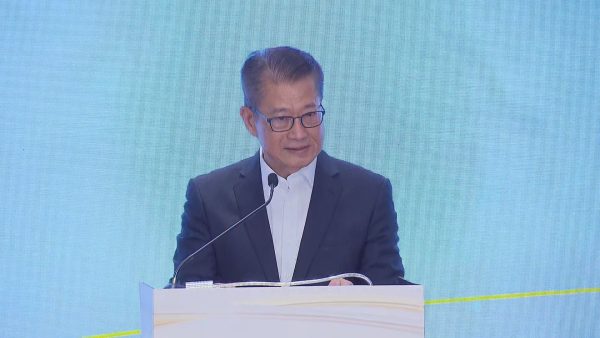
Financial Secretary Paul Chan says over the past few years, Hong Kong's global competitiveness has strengthened significantly, while expressing confidence that the government's operating accounts will stay in the green in fiscal year 26/27 -- with resilient export figures and steadily improving consumer spending in Q2.
But he admits the capital accounts might be tighter because of the investment earmarked for the Northern Metropolis.
Jacky Lin spoke with the finance chief.
As the administration steps into the final year of their tenure with the imminent rollout of the city's first Five-Year Plan, Financial Secretary Paul Chan spoke with the press about recent international recognition of the city's competitiveness.
This as Hong Kong has overtaken Switzerland to be crowned as the world's largest cross-border wealth management hub and climbed global competitiveness ranking for three consecutive years -- reaching second place worldwide.
In Q1 this year, Hong Kong logged the strongest economic growth in nearly five years.
The finance chief says he remains cautiously optimistic towards Q2 amid headwinds from geopolitical tensions and oil prices.
But with the SpaceX IPO restrictions on Hong Kong, how can the city prevent further decoupling from the Western markets -- and minimise fallouts on the city's economy over the long term?
Chan says there's a gap between politics and business sentiments between the two sides -- and he's confident that capital continues to flow from international markets.
PAUL CHAN: "Given the geopolitics, there are ups and downs in the market. Every market has its own cycle. If we have good companies coming here for listing, capital will follow. When we take a look at the few major IPOs last year in Hong Kong. Many of the cornerstone investors are indeed US and European investors."
PAUL CHAN: "There is a certain gap between the political sector and the business sector, finance sector. For us, it is continue to engage the finance and the business sector to keep them fully informed of the development and progress here. These are the people best placed to make the business, investment decisions."
In terms of government's fiscal situation, I'm confident in year 26/27, we will continue to register operating surplus.
But for the coffer's capital accounts, because of the 120 billion dollar annual investment earmarked for the Northern Metropolis, and as land sales revenue won't be generated that soon, Paul Chan says that might hamstring income, but it will be balanced by bond issuances.
The finance chief also echoed what Morgan Stanley earlier said: market worries from mainland oversight on brokerages in Hong Kong are apparently overdone.
PAUL CHAN: "Action of the CSRC with regard to those funds coming to Hong Kong through irregular channels, the impact is short term. It is very clear to us that the central government is very supportive of Hong Kong and wants to see Hong Kong succeed as an international financial centre. And there are legitimate schemes, for example, connect schemes with the mainland to have this capital to come to Hong Kong in the proper channel."
He notes Greater Bay Area investors can now invest in Hong Kong financial products through connect schemes, also revealing that discussions with mainland authorities are progressing well on measures to relax investor eligibility requirements, broaden product offerings and raise individual investment quota.
Financial Secretary Paul Chan also spoke with the press about the city's AI strategy. As AI has become a national development priority, Hong Kong is positioning itself to ride that wave with businesses encouraged to embrace AI to boost productivity and improve services. Chan also said the key is not just understanding AI, but also learning how to use it well -- for workers and companies alike to leverage new growth opportunities and stay ahead of the curve.
更多新聞
Paul Chan says HK can develop gerontechnology


Shein starts the day lower than IPO price
Are Chinese markets seeing a boom in IPO or a bubble?
熱門新聞


條款及細則
條款及細則
隨時隨地觀看新聞,立即下載

'%3e%3cpath%20id='路径_2'%20data-name='路径%202'%20d='M579.91,145.916a42.433,42.433,0,1,0,42.528,42.433,41.772,41.772,0,0,0-42.528-42.433m0,68.138a25.8,25.8,0,1,1,23.91-25.705,24.572,24.572,0,0,1-23.91,25.705m-92.9-68.138a42.433,42.433,0,1,0,42.528,42.433,41.772,41.772,0,0,0-42.528-42.433m0,68.138a25.8,25.8,0,1,1,23.911-25.705,24.572,24.572,0,0,1-23.911,25.705m-110.38-55.1v17.956h42.621A37.793,37.793,0,0,1,409.8,199.6a44.037,44.037,0,0,1-33.266,13.135,47.914,47.914,0,0,1,0-95.734,45.836,45.836,0,0,1,32.415,12.854l12.664-12.664a62.75,62.75,0,0,0-45.174-18.144,66.153,66.153,0,1,0,0,131.739,60.2,60.2,0,0,0,45.93-18.9A59.452,59.452,0,0,0,438.154,170.2a58.644,58.644,0,0,0-.946-11.246Zm451.638,14.364a39.409,39.409,0,0,0-36.291-26.933A40.259,40.259,0,0,0,752,188.822a41.49,41.49,0,0,0,42.055,42.432,42.148,42.148,0,0,0,35.344-18.9l-14.459-9.45a24.193,24.193,0,0,1-20.885,11.718,21.546,21.546,0,0,1-20.6-12.852l56.7-23.436ZM770.431,187.5a23.249,23.249,0,0,1,22.21-24.76,16.441,16.441,0,0,1,15.781,9.45Zm-46.023,40.637h18.9V103.577h-18.9Zm-30.525-72.77h-.568a29.385,29.385,0,0,0-22.3-9.449,42.526,42.526,0,0,0,0,85.053,28.908,28.908,0,0,0,22.3-9.449h.663v6.142c0,16.256-8.7,24.854-22.681,24.854a23.431,23.431,0,0,1-21.358-15.12l-16.255,6.71a40.446,40.446,0,0,0,37.8,25.044c21.829,0,40.354-12.853,40.354-44.134V148.468H693.883Zm-21.359,58.594A24.381,24.381,0,0,1,648.9,188.443a24.57,24.57,0,0,1,23.625-25.894,23.909,23.909,0,0,1,22.682,25.894,23.722,23.722,0,0,1-22.682,25.611ZM915.592,103.484H870.985V228.135h18.9V180.883h25.988a38.747,38.747,0,1,0,0-77.4Zm.471,60.1H889.6V120.872h26.461a21.358,21.358,0,1,1,0,42.715m115.012-17.861a34.97,34.97,0,0,0-33.171,18.9l16.539,6.9a17.583,17.583,0,0,1,17.01-9.452,17.958,17.958,0,0,1,19.564,16.066v1.324a41.193,41.193,0,0,0-19.373-4.819c-17.767,0-35.913,9.449-35.913,28.35a28.352,28.352,0,0,0,30.9,27.407,26.277,26.277,0,0,0,23.722-12.191h.661v9.45h17.956v-47.44c-.095-22.115-16.539-34.5-37.9-34.5m-2.268,68.328c-6.047,0-14.552-3.024-14.552-10.585,0-9.45,10.583-13.325,19.751-13.325a33.169,33.169,0,0,1,17.011,4.159,22.588,22.588,0,0,1-22.21,19.751m105.468-65.586-21.357,54.057h-.663l-22.02-54.057H1070.2l33.172,75.6-18.9,42.054h19.374l51.128-117.563ZM966.718,228.135h18.9V103.577h-18.9Zm-840.431-101.5L4.377,4.631A20.131,20.131,0,0,0,.029,18.24V238.72a21.079,21.079,0,0,0,3.4,12.569Zm4.064-3.876,37.8-37.8L25.356,3.214A18.9,18.9,0,0,0,8.912.945Zm89.4-8.695L172.5,87.417l-38.652,39.221,41.3,41.3L219.28,142.8c14.46-7.844,14.46-20.791.472-28.73m-89.4,16.539L7.495,254.974a17.768,17.768,0,0,0,17.768-1.607l144.686-82.219h.566Z'%20fill='%23fff'/%3e%3c/g%3e%3c/svg%3e)


Copyright 2026 TVB Limited