

- 简
- 繁
- En


Typhoon Bavi heads for mainland east coast
發佈: 2026-07-11 20:47
撰文: 無綫新聞


Typhoon Bavi has hit Okinawa and swept across
the Sakishima Islands in Japan bringing strong winds and heavy rain.
The eye of the storm is now only hours away from reaching the
Chinese mainland city of Wenzhou.
Typhoon Bavi hit Okinawa Prefecture, Japan
and was closest to the Sakishima Islands in the early morning.
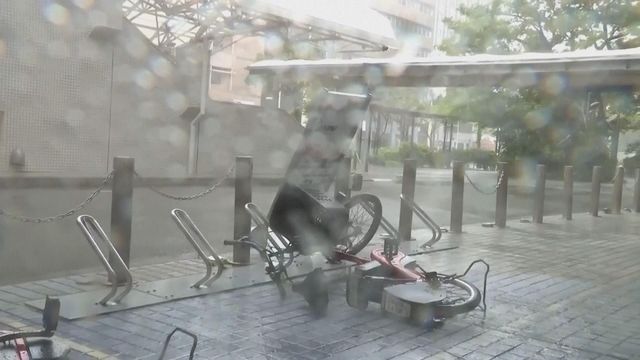
Miyako Island and Ishigaki Island experienced strong wind
and heavy rain Saturday morning.
The weather service said that after passing Miyako Island,
Bavi continue to move northwest and bands of rain clouds
are expected to develop through Saturday evening
increasing risks to the public.
Some areas received up to 250 millimeters of rainfall in 24 hours.
Wind gust speed in the Sakishima Islands reached 216 kilometres an hour,
enough strength to topple houses.
Even though the eye of the storm is moving away,
the storm's influence still extends over a large area.
Flights in Okinawa were severely affected with Japan Airlines
alone cancelling more than 50 flights to and from
Naha, Kagoshima and other destinations.
All Nippon Airways has cancelled more than 70 flights.
Bavi also brought disaster to the Philippines
causing more than a dozen deaths in the southern island
of Mindanao.
On Friday heavy rain brought by Bavi triggered landslides
blocking roads with mud and rocks, and temporarily disrupting local traffic.
Bavi, continued to move closer to Taiwan during the day
with wind and rain intensifying in Yilan County in the region's northeast.
In Yilan, high winds caused waves to rise as high as eight meters
and ripped off tree branches.
Maximum gusts were expected to reach 117 kilometres per hour
on Saturday, with the mountainous areas facing the risk of torrential rain.
As Bavi barrels toward east China, thousands of fishing boats
and cargo vessels have returned to safe harbours in Fujian and Zhejiang provinces
ahead of its expected landfall Saturday night.
Waves at sea were exceptionally high in Shitang Town,
the easternmost township of Wenling City, Zhejiang Province,
which is historically among the first areas to experience direct impacts
of landfalling typhoons in these parts.
The breakwater there, which stands about four meters high,
has been topped by waves in some places.
Many local residents have already begun typhoon preparations days ago,
including sealing doors and windows.
更多新聞


HK and Guangdong law enforcement bust forgery syndicate

Mainland student jailed for forging TOEFL scores
熱門新聞


條款及細則
條款及細則
隨時隨地觀看新聞,立即下載

'%3e%3cpath%20id='路径_2'%20data-name='路径%202'%20d='M579.91,145.916a42.433,42.433,0,1,0,42.528,42.433,41.772,41.772,0,0,0-42.528-42.433m0,68.138a25.8,25.8,0,1,1,23.91-25.705,24.572,24.572,0,0,1-23.91,25.705m-92.9-68.138a42.433,42.433,0,1,0,42.528,42.433,41.772,41.772,0,0,0-42.528-42.433m0,68.138a25.8,25.8,0,1,1,23.911-25.705,24.572,24.572,0,0,1-23.911,25.705m-110.38-55.1v17.956h42.621A37.793,37.793,0,0,1,409.8,199.6a44.037,44.037,0,0,1-33.266,13.135,47.914,47.914,0,0,1,0-95.734,45.836,45.836,0,0,1,32.415,12.854l12.664-12.664a62.75,62.75,0,0,0-45.174-18.144,66.153,66.153,0,1,0,0,131.739,60.2,60.2,0,0,0,45.93-18.9A59.452,59.452,0,0,0,438.154,170.2a58.644,58.644,0,0,0-.946-11.246Zm451.638,14.364a39.409,39.409,0,0,0-36.291-26.933A40.259,40.259,0,0,0,752,188.822a41.49,41.49,0,0,0,42.055,42.432,42.148,42.148,0,0,0,35.344-18.9l-14.459-9.45a24.193,24.193,0,0,1-20.885,11.718,21.546,21.546,0,0,1-20.6-12.852l56.7-23.436ZM770.431,187.5a23.249,23.249,0,0,1,22.21-24.76,16.441,16.441,0,0,1,15.781,9.45Zm-46.023,40.637h18.9V103.577h-18.9Zm-30.525-72.77h-.568a29.385,29.385,0,0,0-22.3-9.449,42.526,42.526,0,0,0,0,85.053,28.908,28.908,0,0,0,22.3-9.449h.663v6.142c0,16.256-8.7,24.854-22.681,24.854a23.431,23.431,0,0,1-21.358-15.12l-16.255,6.71a40.446,40.446,0,0,0,37.8,25.044c21.829,0,40.354-12.853,40.354-44.134V148.468H693.883Zm-21.359,58.594A24.381,24.381,0,0,1,648.9,188.443a24.57,24.57,0,0,1,23.625-25.894,23.909,23.909,0,0,1,22.682,25.894,23.722,23.722,0,0,1-22.682,25.611ZM915.592,103.484H870.985V228.135h18.9V180.883h25.988a38.747,38.747,0,1,0,0-77.4Zm.471,60.1H889.6V120.872h26.461a21.358,21.358,0,1,1,0,42.715m115.012-17.861a34.97,34.97,0,0,0-33.171,18.9l16.539,6.9a17.583,17.583,0,0,1,17.01-9.452,17.958,17.958,0,0,1,19.564,16.066v1.324a41.193,41.193,0,0,0-19.373-4.819c-17.767,0-35.913,9.449-35.913,28.35a28.352,28.352,0,0,0,30.9,27.407,26.277,26.277,0,0,0,23.722-12.191h.661v9.45h17.956v-47.44c-.095-22.115-16.539-34.5-37.9-34.5m-2.268,68.328c-6.047,0-14.552-3.024-14.552-10.585,0-9.45,10.583-13.325,19.751-13.325a33.169,33.169,0,0,1,17.011,4.159,22.588,22.588,0,0,1-22.21,19.751m105.468-65.586-21.357,54.057h-.663l-22.02-54.057H1070.2l33.172,75.6-18.9,42.054h19.374l51.128-117.563ZM966.718,228.135h18.9V103.577h-18.9Zm-840.431-101.5L4.377,4.631A20.131,20.131,0,0,0,.029,18.24V238.72a21.079,21.079,0,0,0,3.4,12.569Zm4.064-3.876,37.8-37.8L25.356,3.214A18.9,18.9,0,0,0,8.912.945Zm89.4-8.695L172.5,87.417l-38.652,39.221,41.3,41.3L219.28,142.8c14.46-7.844,14.46-20.791.472-28.73m-89.4,16.539L7.495,254.974a17.768,17.768,0,0,0,17.768-1.607l144.686-82.219h.566Z'%20fill='%23fff'/%3e%3c/g%3e%3c/svg%3e)


Copyright 2026 Television Broadcasts Limited