

- 简
- 繁
- En


AI in legal education – the balance to be struck | Behind the Wig
發佈: 2026-08-03 07:00
撰文: 大律師 / Barristers


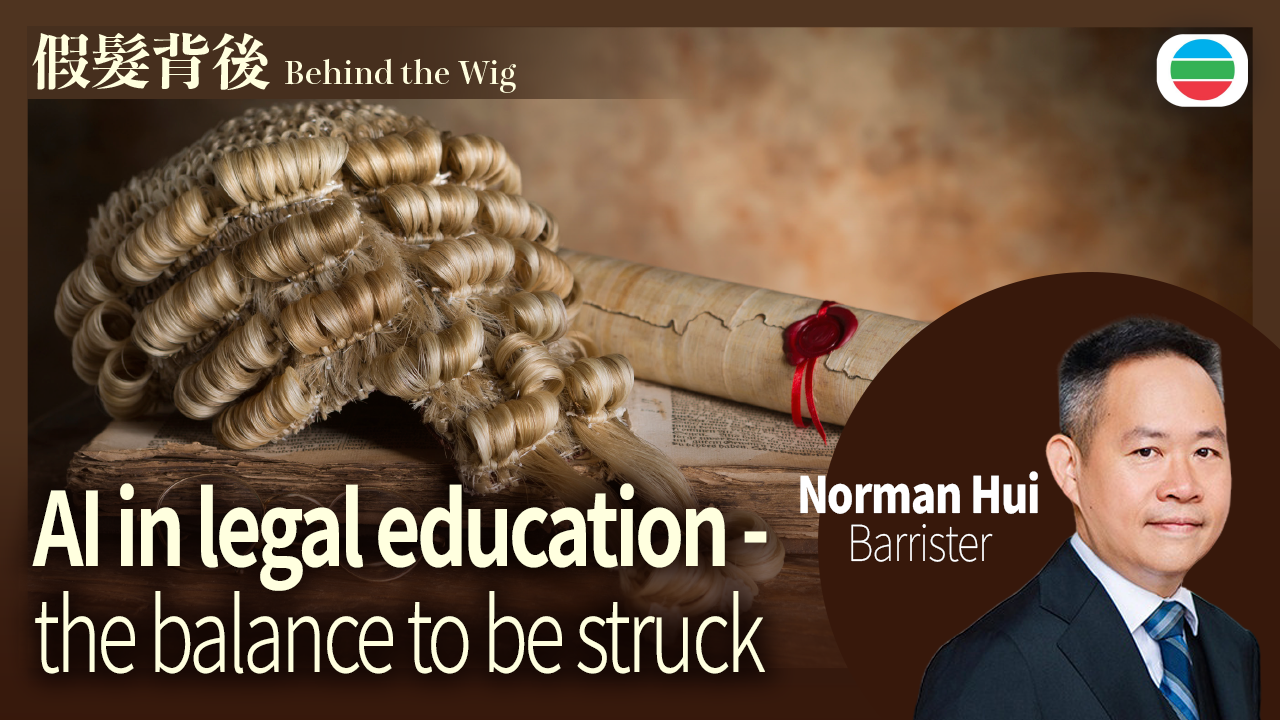
Norman Hui
Barrister
Principal Lecturer HKU
AI is a revolutionary ally for practicing lawyers but for law students there is a debate as to how much AI should be deployed in the process of their legal education.
Advocates for deploying AI in law students’ education may point to AI’s uncanny ability to accelerate legal research, assist with drafting and provide immediate commentary. Rather than waiting for a lecturer or supervisor to give feedback, students can interact with AI as a round-the-clock tutor, testing ideas and refining arguments within minutes. In an era where legal practice is increasingly shaped by technology, such tools as AI also help students develop digital competencies that are becoming increasingly common in modern legal practice. From this perspective, AI promises to democratise access to knowledge and to improve the efficiency of legal learning.
Some examples of law schools moving towards AI integration in legal training would include the Dickson Poon School of Law at King’s College London in its Master of Laws (LLM) programme and the USC Gould School of Law in California. However, certain notable law schools are taking an opposing stance to the march towards AI that would include the University of Chicago Law School and the University of California, Berkeley where there are distinct rules and limits about the use of AI. There has been no known uniform approach to the use of AI in any given jurisdiction with regards to legal education.
The obvious disadvantage from a traditional lawyer’s view in allowing law students to use AI in their legal training is that AI can create an illusion of competence while undermining the careful reasoning and doctrinal understanding that lie at the heart of legal education that can lead to AI overreliance. A serious challenge to both practitioners and students in legal work output is that large language models can produce convincing but incorrect legal statements, a phenomenon commonly described as “hallucinations” where students would be particularly prone to accepting such erroneous output and uncritically risk repeating errors thus weakening their analytical discipline and discipline generally.
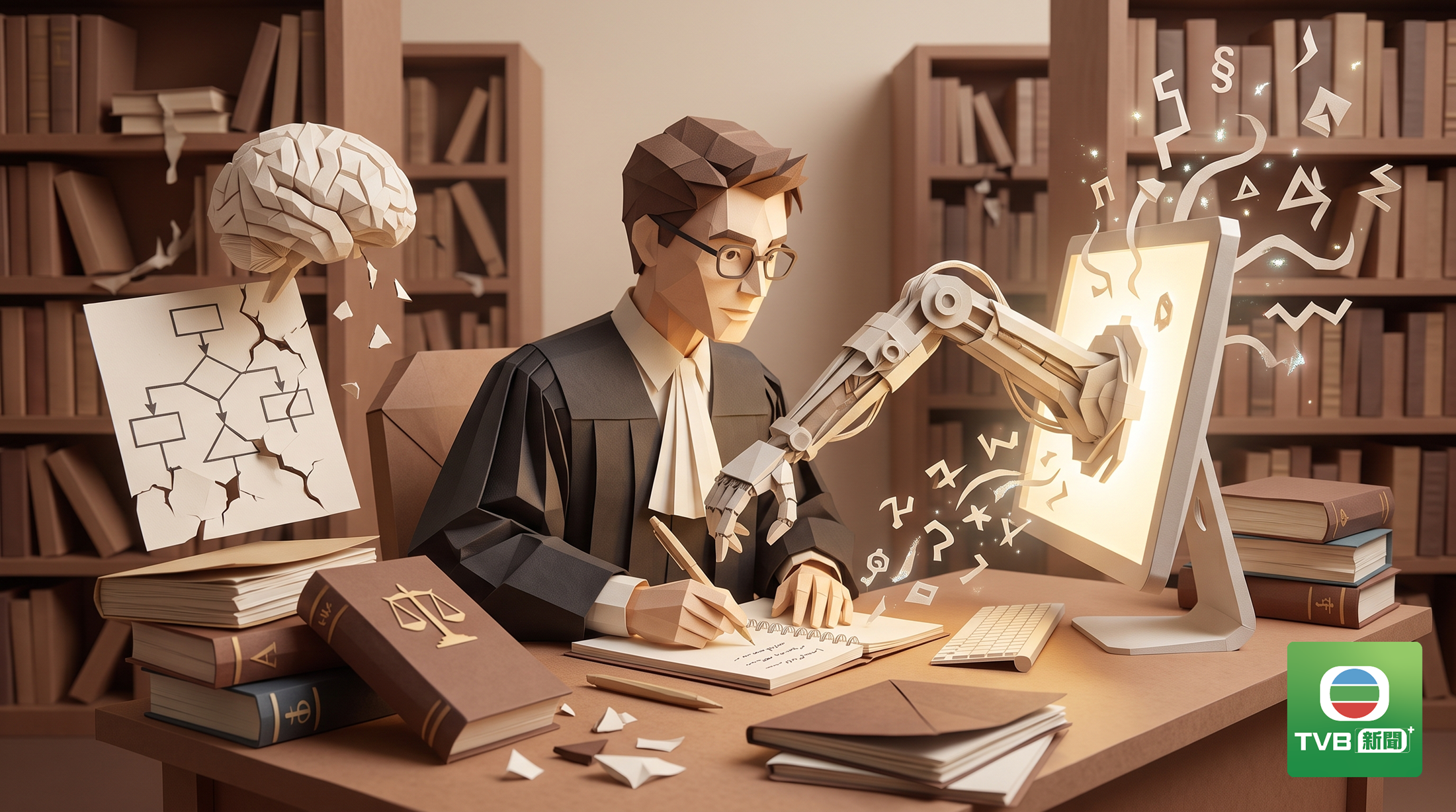
But ignoring powerful and available tools to law students would also be backward and having AI in training deployed properly would be useful. Law students who receive proper instruction on prompt design, verification techniques and critical evaluation may be able to use AI more effectively if their underlying knowledge on identifying and applying legal concepts and rules is first properly formed before their journey towards using AI is used in any substantive manner and in their legal work output.
The three law schools in Hong Kong will undoubtedly be active in considering the use and limits that AI may provide in law students’ legal education. A proper balance on how and when AI will be used by law students will need to be struck by the three law schools in Hong Kong and presumably this points towards significant curriculum design considerations.
Graduating law students from Hong Kong’s law schools who then decide to join the Bar places a need on the Hong Kong Bar Association (HKBA) to consider how and when AI can be deployed during their pupillage as well as during their mandatory participation in its Advanced Legal Education Programme with marked consequences for its misapplication.
It is very apparent that various jurisdictions across the world are dealing with the real problem of “hallucinations” affecting court proceedings by legal practitioners with at times severe consequences of wrongful use of AI in real cases. As a starting point, both at the law school level and during pupillage, the risks and consequences of AI “hallucinations” should be emphasised since lawyers found subject to misuse and/or abuse of AI in legal proceedings in England and Wales makes them subject to the Hamid jurisdiction relating to the court’s inherent power to regulate its own procedures and to enforce duties that lawyers owe to the court as per R (Ayinde) v London Borough of Haringey [2025] EWHC 1383 (Admin).
The HKBA has established the Standing Committee on AI and Ethics, which I have the privilege of chairing. The Committee will be liaising with all relevant stakeholders on moving forward with AI technology at all levels.
Mr. Norman Hui is Chairman of the Artificial Intelligence and Ethics Committee, Co-Chairman of the Pro Bono Affairs Committee, Member of the Intellectual Property Committee, Personal Injuries Committee and Continuing Education Committee of the Hong Kong Bar Association. His private practice and teaching at the University of Hong Kong are in the same or similar areas of litigation.


Behind the Wig is a weekly legal column written by practicing barristers specialising in criminal, civil, and commercial law. Drawing on their legal expertise and practical experience, or sharing their observations and insights as barristers, they analyse social issues, encourage readers to interpret everyday matters through a legal mindset, and promote the spirit of the rule of law.
The views expressed in this article are the author’s own and do not reflect TVB’s editorial stance.
更多新聞
熱門新聞


條款及細則
條款及細則
隨時隨地觀看新聞,立即下載

'%3e%3cpath%20id='路径_2'%20data-name='路径%202'%20d='M579.91,145.916a42.433,42.433,0,1,0,42.528,42.433,41.772,41.772,0,0,0-42.528-42.433m0,68.138a25.8,25.8,0,1,1,23.91-25.705,24.572,24.572,0,0,1-23.91,25.705m-92.9-68.138a42.433,42.433,0,1,0,42.528,42.433,41.772,41.772,0,0,0-42.528-42.433m0,68.138a25.8,25.8,0,1,1,23.911-25.705,24.572,24.572,0,0,1-23.911,25.705m-110.38-55.1v17.956h42.621A37.793,37.793,0,0,1,409.8,199.6a44.037,44.037,0,0,1-33.266,13.135,47.914,47.914,0,0,1,0-95.734,45.836,45.836,0,0,1,32.415,12.854l12.664-12.664a62.75,62.75,0,0,0-45.174-18.144,66.153,66.153,0,1,0,0,131.739,60.2,60.2,0,0,0,45.93-18.9A59.452,59.452,0,0,0,438.154,170.2a58.644,58.644,0,0,0-.946-11.246Zm451.638,14.364a39.409,39.409,0,0,0-36.291-26.933A40.259,40.259,0,0,0,752,188.822a41.49,41.49,0,0,0,42.055,42.432,42.148,42.148,0,0,0,35.344-18.9l-14.459-9.45a24.193,24.193,0,0,1-20.885,11.718,21.546,21.546,0,0,1-20.6-12.852l56.7-23.436ZM770.431,187.5a23.249,23.249,0,0,1,22.21-24.76,16.441,16.441,0,0,1,15.781,9.45Zm-46.023,40.637h18.9V103.577h-18.9Zm-30.525-72.77h-.568a29.385,29.385,0,0,0-22.3-9.449,42.526,42.526,0,0,0,0,85.053,28.908,28.908,0,0,0,22.3-9.449h.663v6.142c0,16.256-8.7,24.854-22.681,24.854a23.431,23.431,0,0,1-21.358-15.12l-16.255,6.71a40.446,40.446,0,0,0,37.8,25.044c21.829,0,40.354-12.853,40.354-44.134V148.468H693.883Zm-21.359,58.594A24.381,24.381,0,0,1,648.9,188.443a24.57,24.57,0,0,1,23.625-25.894,23.909,23.909,0,0,1,22.682,25.894,23.722,23.722,0,0,1-22.682,25.611ZM915.592,103.484H870.985V228.135h18.9V180.883h25.988a38.747,38.747,0,1,0,0-77.4Zm.471,60.1H889.6V120.872h26.461a21.358,21.358,0,1,1,0,42.715m115.012-17.861a34.97,34.97,0,0,0-33.171,18.9l16.539,6.9a17.583,17.583,0,0,1,17.01-9.452,17.958,17.958,0,0,1,19.564,16.066v1.324a41.193,41.193,0,0,0-19.373-4.819c-17.767,0-35.913,9.449-35.913,28.35a28.352,28.352,0,0,0,30.9,27.407,26.277,26.277,0,0,0,23.722-12.191h.661v9.45h17.956v-47.44c-.095-22.115-16.539-34.5-37.9-34.5m-2.268,68.328c-6.047,0-14.552-3.024-14.552-10.585,0-9.45,10.583-13.325,19.751-13.325a33.169,33.169,0,0,1,17.011,4.159,22.588,22.588,0,0,1-22.21,19.751m105.468-65.586-21.357,54.057h-.663l-22.02-54.057H1070.2l33.172,75.6-18.9,42.054h19.374l51.128-117.563ZM966.718,228.135h18.9V103.577h-18.9Zm-840.431-101.5L4.377,4.631A20.131,20.131,0,0,0,.029,18.24V238.72a21.079,21.079,0,0,0,3.4,12.569Zm4.064-3.876,37.8-37.8L25.356,3.214A18.9,18.9,0,0,0,8.912.945Zm89.4-8.695L172.5,87.417l-38.652,39.221,41.3,41.3L219.28,142.8c14.46-7.844,14.46-20.791.472-28.73m-89.4,16.539L7.495,254.974a17.768,17.768,0,0,0,17.768-1.607l144.686-82.219h.566Z'%20fill='%23fff'/%3e%3c/g%3e%3c/svg%3e)


Copyright 2026 TVB Limited