

- 简
- 繁
- En


China looks to build stable framework, negotiation mechanism with US
發佈: 2026-09-20 20:29
撰文: 無綫新聞


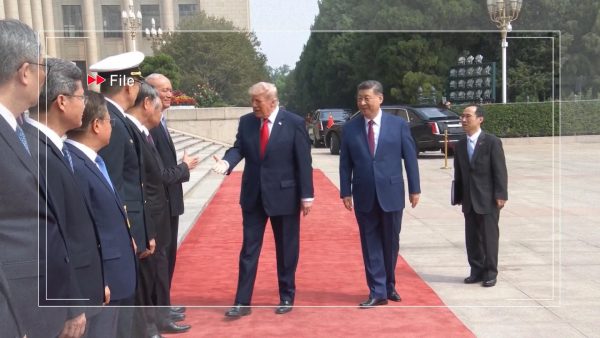
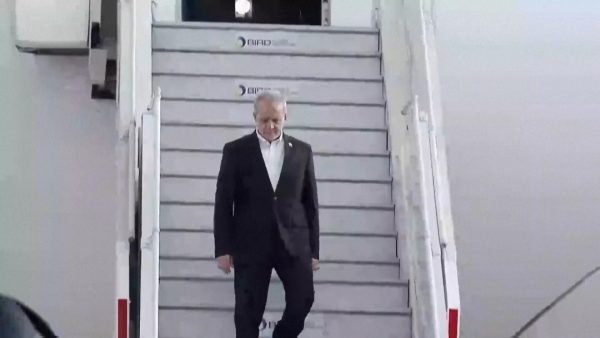
Chinese President Xi Jinping is set to pay a state visit to the United States this week. Scholars suggest Beijing aims to build a stable framework and negotiation mechanism for bilateral ties, including an extension to the expiring tariff truce.
Meanwhile, the business sector hopes high-level dialogue will improve the commercial atmosphere and spur investment.
Watch manufacturer Ray Lin was checking out sales performance of his micro-brand at the Hong Kong Watch & Clock Fair. Combined with OEM manufacturing, at least half of Ray's output goes to the US market.
But amid the ongoing US tariff war and the revocation of the duty-free exemption on packages under 800 US dollars, orders plummeted by half at their lowest point. Still, he notes the US market remains indispensable.
Lin says: "It could, ranging from 20 to 30%, cost on that yeah so it sometimes is also quite heavily affected our profit, margin but I think it's something that we have to do to keep the market going."
He adds: "From time to time, we also would do promotion, like free tariffs, free shipping, to try to make them wanna keep doing business with us. And at the same time, I think being so heavily weighted in the US market, that's also obviously a risky business, so, we are trying to expand to other places like Asia, Europe, Middle East, we believe those, are really high potential market as well."
Driven by tariff disputes, China-US bilateral trade has been falling over the past five years. Last year, trade volume reached 559.7 billion US dollars, an 18% drop year-on-year.
Meanwhile, the tariff truce between Chinese and US leaders last October during the APEC Summit in Busan, South Korea, is set to expire this November.
Scholars believe one of Beijing's key goals is extending that tariff truce through the end of US President Donald Trump's term, backed by its growing leverage.
International relations scholar Wilson Chan says: "Beijing, in terms of its economic powers, in terms of its technological power, in terms, of its control over sensitive and important raw materials like rare earth, they have much, more bargaining chips than 10 years ago."
"They don't want to repeat these kinds of negotiations year-by-year. They want to have a much more structural and enduring framework. Like for example, could we institutionalise the Board of Trade and, the Board of Investment as serving as a mechanism to control Trump's executive orders."
Hong Kong's business sector hopes top-level talks will improve the commercial climate and drive investment.
President of the American Chamber of Commerce Eden Woon says: "I think that the Board of Investment maybe both sides can agree what the purpose of the Border of Investment is...The Chinese view is much more comprehensive and overarching one. The American view is that this will be very, very specific."
President Xi's last visit to the US was for the APEC summit in 2023. His last state visit was 11 years ago, starting in Seattle, where he met with tech executives and community representatives.
更多新聞



熱門新聞


條款及細則
條款及細則
隨時隨地觀看新聞,立即下載

'%3e%3cpath%20id='路径_2'%20data-name='路径%202'%20d='M579.91,145.916a42.433,42.433,0,1,0,42.528,42.433,41.772,41.772,0,0,0-42.528-42.433m0,68.138a25.8,25.8,0,1,1,23.91-25.705,24.572,24.572,0,0,1-23.91,25.705m-92.9-68.138a42.433,42.433,0,1,0,42.528,42.433,41.772,41.772,0,0,0-42.528-42.433m0,68.138a25.8,25.8,0,1,1,23.911-25.705,24.572,24.572,0,0,1-23.911,25.705m-110.38-55.1v17.956h42.621A37.793,37.793,0,0,1,409.8,199.6a44.037,44.037,0,0,1-33.266,13.135,47.914,47.914,0,0,1,0-95.734,45.836,45.836,0,0,1,32.415,12.854l12.664-12.664a62.75,62.75,0,0,0-45.174-18.144,66.153,66.153,0,1,0,0,131.739,60.2,60.2,0,0,0,45.93-18.9A59.452,59.452,0,0,0,438.154,170.2a58.644,58.644,0,0,0-.946-11.246Zm451.638,14.364a39.409,39.409,0,0,0-36.291-26.933A40.259,40.259,0,0,0,752,188.822a41.49,41.49,0,0,0,42.055,42.432,42.148,42.148,0,0,0,35.344-18.9l-14.459-9.45a24.193,24.193,0,0,1-20.885,11.718,21.546,21.546,0,0,1-20.6-12.852l56.7-23.436ZM770.431,187.5a23.249,23.249,0,0,1,22.21-24.76,16.441,16.441,0,0,1,15.781,9.45Zm-46.023,40.637h18.9V103.577h-18.9Zm-30.525-72.77h-.568a29.385,29.385,0,0,0-22.3-9.449,42.526,42.526,0,0,0,0,85.053,28.908,28.908,0,0,0,22.3-9.449h.663v6.142c0,16.256-8.7,24.854-22.681,24.854a23.431,23.431,0,0,1-21.358-15.12l-16.255,6.71a40.446,40.446,0,0,0,37.8,25.044c21.829,0,40.354-12.853,40.354-44.134V148.468H693.883Zm-21.359,58.594A24.381,24.381,0,0,1,648.9,188.443a24.57,24.57,0,0,1,23.625-25.894,23.909,23.909,0,0,1,22.682,25.894,23.722,23.722,0,0,1-22.682,25.611ZM915.592,103.484H870.985V228.135h18.9V180.883h25.988a38.747,38.747,0,1,0,0-77.4Zm.471,60.1H889.6V120.872h26.461a21.358,21.358,0,1,1,0,42.715m115.012-17.861a34.97,34.97,0,0,0-33.171,18.9l16.539,6.9a17.583,17.583,0,0,1,17.01-9.452,17.958,17.958,0,0,1,19.564,16.066v1.324a41.193,41.193,0,0,0-19.373-4.819c-17.767,0-35.913,9.449-35.913,28.35a28.352,28.352,0,0,0,30.9,27.407,26.277,26.277,0,0,0,23.722-12.191h.661v9.45h17.956v-47.44c-.095-22.115-16.539-34.5-37.9-34.5m-2.268,68.328c-6.047,0-14.552-3.024-14.552-10.585,0-9.45,10.583-13.325,19.751-13.325a33.169,33.169,0,0,1,17.011,4.159,22.588,22.588,0,0,1-22.21,19.751m105.468-65.586-21.357,54.057h-.663l-22.02-54.057H1070.2l33.172,75.6-18.9,42.054h19.374l51.128-117.563ZM966.718,228.135h18.9V103.577h-18.9Zm-840.431-101.5L4.377,4.631A20.131,20.131,0,0,0,.029,18.24V238.72a21.079,21.079,0,0,0,3.4,12.569Zm4.064-3.876,37.8-37.8L25.356,3.214A18.9,18.9,0,0,0,8.912.945Zm89.4-8.695L172.5,87.417l-38.652,39.221,41.3,41.3L219.28,142.8c14.46-7.844,14.46-20.791.472-28.73m-89.4,16.539L7.495,254.974a17.768,17.768,0,0,0,17.768-1.607l144.686-82.219h.566Z'%20fill='%23fff'/%3e%3c/g%3e%3c/svg%3e)


Copyright 2026 TVB Limited